Guide for founders
Founder health: how to keep your energy while you build the company
A practical guide to founder health: why the startup week drains you, what is worth measuring, and what to change first.

Founder health usually breaks down in the same order: sleep goes first, then caffeine and alcohol start doing the work sleep used to do, and burnout shows up months later as a slow loss of energy, focus and patience. The fix is rarely one big change. It is noticing the pattern early, measuring what can be measured (sleep, blood tests, blood pressure, mood), and changing the two or three habits that carry the most weight.
This guide is written around a founder's real week: always on, identity tied to the company, nobody above you to notice when you're slipping, and money worries that follow you to bed. It covers why that week drains you, the burnout signs founders miss, what is worth checking, and when to see a doctor rather than push through.
It's general information, not a diagnosis. If something here sounds familiar, the most useful next step is a conversation with a doctor, ideally with some real numbers in front of you.
Why do founders burn out?
Burnout is not the same as a hard month. The World Health Organization describes it as the result of chronic workplace stress that hasn't been successfully managed, with three parts: exhaustion, growing distance or cynicism about the work, and reduced effectiveness. Founders tick a lot of the boxes that make that more likely.
- There is no end to the day. Investors, customers and your team are in different time zones and on different schedules. Slack is on your phone. The company never stops, so neither do you.
- Your identity is the company. When the business is your name, your savings and your story, a bad week at work feels like a bad week as a person. Stepping back feels like failure.
- Nobody is above you. In a larger organisation a manager might notice you've gone quiet or short with people. As a founder, nobody is in that seat. Your team may see it but not feel able to say it.
- The stakes are personal. Payroll, runway and a raise that may or may not close all land on you.
Safe Work Australia lists high job demands, low support and isolated work among the common psychosocial hazards at work. A founder can have all three at once, and nobody is formally responsible for managing them except you.
Founders also tend to act late. In a 2025 Bupa and Oxford Economics survey, 40% of entrepreneurs said they wait until stress is critical before doing anything about it. The posts below go deeper on how burnout builds, and why founders spot it late.


How do fundraising and payroll stress affect your health?
Most founder stress isn't the work itself. It's uncertainty. A round that's taking twice as long as planned, a big customer who hasn't paid, a payroll date that's closer than the money is. These worries don't stay at the office. They come home, sit at the dinner table and wake you at 3am.
Stress like this is meant to be short. Your body is built to rise to a challenge and then settle. A raise that drags on for six months doesn't give it the chance to settle. Over time, many founders notice the same things: sleep that's lighter and shorter, a racing mind at night, tight shoulders and jaw, headaches, a shorter fuse, and either eating everything or forgetting to eat at all.
Some practical ways to take the edge off the money side:
- Know your real numbers. A weekly look at runway and cash, at a set time, is less stressful than checking the bank app twenty times a day.
- Write the worst case down. Most founders carry a vague dread. Writing out what happens if the round doesn't close, and what you'd do, often makes it smaller.
- Share the load. A co-founder, chair or trusted adviser who knows the numbers means you're not the only person holding them.
- Keep the basics running in the hard months. The weeks before a raise closes are exactly when sleep, food and movement matter most, and exactly when they slip.
If stress has stopped switching off at all, even on good weeks, that's worth talking to a doctor about. Our stress page explains how Hustl approaches it, and the posts below cover why worry is so good at keeping you awake.
What does a founder's week do to your sleep?
Sleep is usually the first thing to give. It rarely goes in one dramatic night. It goes in small trades: one more email at 11pm, a 6am investor call, a phone on the bedside table that lights up at 2am.
The Sleep Health Foundation's Aussie Sleep Snapshot Survey 2026 found Australians averaged 6.9 hours a night, and 36.9% of workers said work-related factors affect their sleep on the nights they don't sleep well. The most common general factors were a busy mind (41.1%), worry or anxiety (35.5%) and financial stress (25.4%). For most founders, that list reads like a description of a normal Tuesday.
Workers who said work affected their sleep were also more likely to report poor sleep three or more nights a week (62.2% compared with 48.5%) and more likely to underperform at work four or more days a month because of it. Short sleep matters for the work itself, too. In an Australian study, after 17 to 19 hours without sleep, performance on some tests was as bad as or worse than at a blood alcohol reading of 0.05, with response speeds up to 50% slower.
The useful question isn't "how do I sleep eight hours every night" but "where is my sleep leaking?" Common leaks for founders:
- A wake time that moves around by two or more hours across the week
- Screens and messages right up to lights out
- Late caffeine and evening drinks (more on both below)
- Waking at 3am with the to-do list already running
- Snoring or gasping that a partner has mentioned, which is worth raising with a doctor
Start with the founder sleep audit. The posts below cover how much sleep you actually need and the signs of sleep apnoea. Our sleep page covers what a doctor looks at.
How do the caffeine and alcohol loops start?
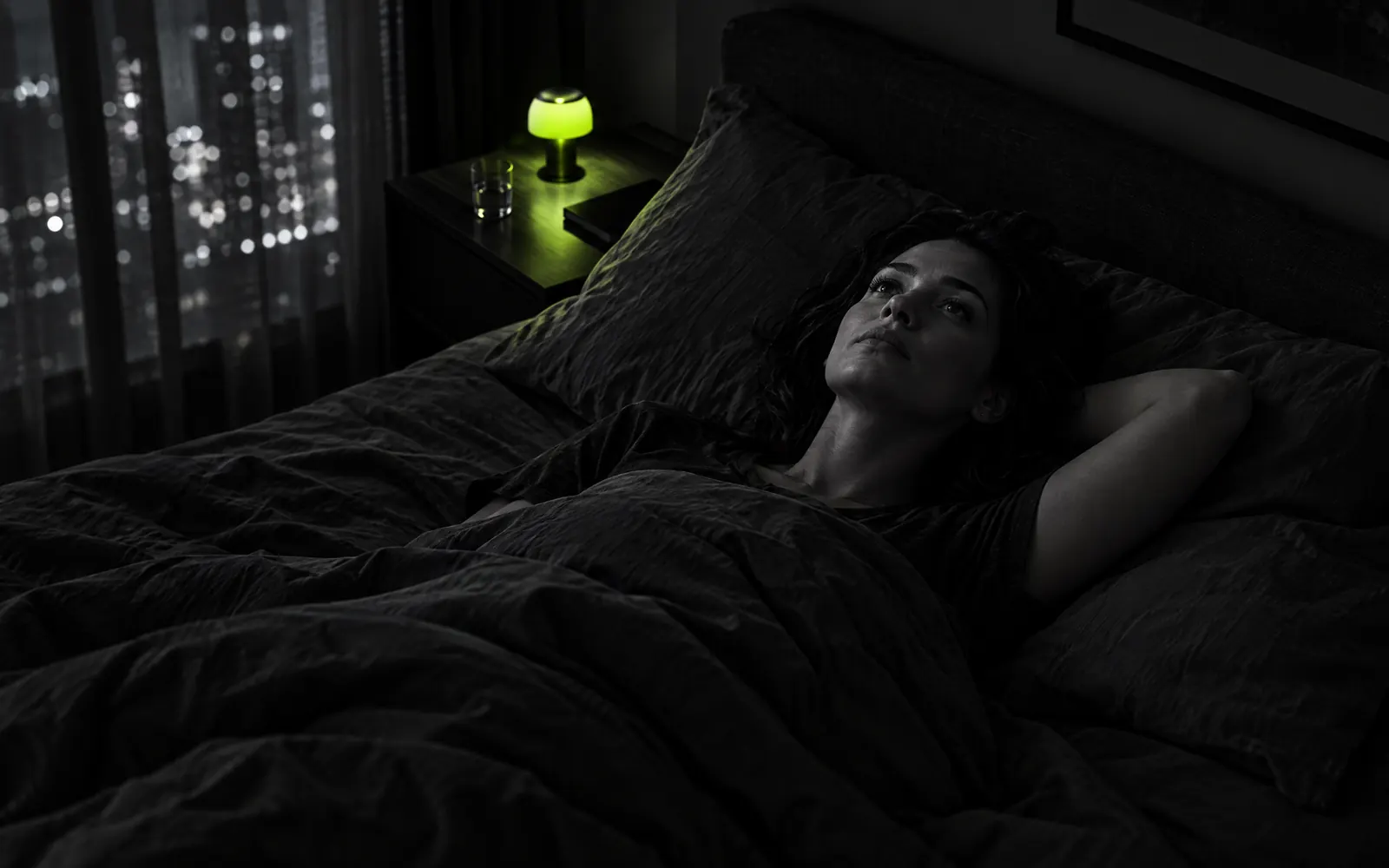
Almost every tired founder has some version of the same loop. You sleep badly, so you drink more coffee. The late coffee makes it harder to sleep. You're wired at 10pm, so you have a drink or two to switch off. The drinks make the second half of the night lighter and more broken. You wake up tired, and the loop runs again.
Neither part is a character flaw. Both are sensible-looking fixes for a short-term problem that make the long-term problem worse.
Caffeine. The Sleep Health Foundation notes caffeine reaches peak levels in the blood within 30 to 70 minutes, its effects can last 3 to 7 hours, and it can take up to 24 hours to fully leave your body. A 3pm flat white is still in your system at bedtime. If you're sensitive, the foundation suggests you may need to avoid caffeine after lunch. Our post on caffeine timing explains how to keep the morning benefit without paying for it at night. Extra coffee can also feel a lot like stress, which the posts below explain.
Alcohol. A drink can help you fall asleep, but it tends to make sleep worse later in the night. The NHMRC guidelines say healthy adults should drink no more than 10 standard drinks a week and no more than 4 on any one day to reduce the risk of harm. Founder life, with dinners, launches and "one quick drink" after a hard day, can push past that without much effort. Read the drink that wrecks tomorrow. If the morning after brings dread as well as a headache, that has a name too: hangxiety.
The simplest way to break the loop is to change one end of it for two weeks: a caffeine cut-off time, or alcohol-free weeknights. Then notice what happens to your sleep and your afternoons.


Why am I so tired even when I'm sleeping enough?
Sometimes the sleep is fine on paper and you're still flat. That's when it's worth thinking beyond willpower and workload. Healthdirect lists lifestyle causes of fatigue such as a busy schedule, poor sleep, too much caffeine and excessive alcohol, alongside stress, anxiety and physical conditions such as iron deficiency and an underactive thyroid.
The common physical causes are often boring and very checkable:
- Low iron stores. Ferritin can run low before you're anaemic. Read low iron and brain fog.
- Thyroid. An underactive thyroid can cause tiredness, low mood and slower thinking. See thyroid and tiredness.
- Blood sugar. A big 3pm slump can relate to what and when you eat, and occasionally to how your body handles glucose.
- Vitamin D and B12. More common in people who work indoors or eat little animal food.
- Testosterone in men. Low levels can show up as low energy, low drive and poor recovery. What to check first covers the symptoms, and our hormone check page explains the testing.
Brain fog deserves its own mention, because it is often the symptom founders notice most: rereading the same email, losing a word mid-pitch, struggling to hold a complex problem in your head. Our brain fog guide, below, walks through causes and the tests worth asking about, and the focus page explains how Hustl approaches it.
The point is not to self-diagnose from a list. It's to stop assuming that tiredness is just the price of building a company, when there may be a measurable reason underneath it.
From the journal

Energy, 7 min read
Why am I so tired all the time? The common causes
Constant tiredness usually has a cause, or a few stacked together. Here's how to work out which ones are yours.

Energy, 5 min read
The boring causes of founder fatigue
Iron, B12, thyroid and blood sugar. Unglamorous, common and very fixable.
What does travel do to a founder's energy?
Raising, selling and hiring often mean flights. A Sydney to Melbourne day trip at 6am, a week in Singapore, or a run through the US to see investors all chip away at sleep and routine.
Healthdirect describes the main symptom of jet lag as feeling very tired during the day and finding it hard to sleep at night, often with poor concentration and irritability. It notes that adjusting to a new time zone usually takes at least 2 or 3 days, and it can be worse when you cross more time zones, especially travelling east. That matters if you've booked the key meeting for the morning after you land.
Practical things that help, based on Healthdirect's advice:
- Get natural light at the right time: morning light after flying east, evening light after flying west.
- Keep naps under 30 minutes, and stay awake for at least 4 hours before bed.
- Drink plenty of water and go easy on alcohol and caffeine on the plane.
- On longer trips, shift to local meal and sleep times as early as you can.
Domestic travel has its own costs: early starts, airport food, hotel bars, and evenings spent answering the emails you didn't get to during the day. If you travel often, protect one thing on the road, such as a fixed wake time or a walk outside before the first meeting, rather than trying to keep your whole routine.
Coming back matters too. Many founders land and go straight into a full week. If you can, keep the first day back light. The effects of short sleep add up faster than they feel, so a few good nights back home are worth protecting.
How do you spot burnout in yourself as a founder?
Because nobody is watching, you have to do the watching. A few honest questions, answered for the last month, can show a pattern before it becomes a crisis:
- Do you wake up tired most days, even after a full night in bed?
- Has a weekend stopped making any difference?
- Are you more cynical about the company, your customers or your team than you were a year ago?
- Are you working longer hours but getting less done?
- Are you leaning on more coffee to start and more alcohol to stop?
- Have you pulled away from friends, exercise or anything that isn't work?
Several yeses doesn't mean you definitely have burnout. Tiredness and flatness also come from low iron, thyroid problems, poor sleep and low mood, which is why it's worth ruling those out. Our am I burnt out? self-check goes further, and the posts below include one on recovering while you keep working.
Loneliness is part of it. Founding a company can be isolating in a way that's hard to explain to friends with jobs. You can't share every worry with your team, your investors want confidence, and your family may already be carrying more than their share. Safe Work Australia counts remote or isolated work and poor support among psychosocial hazards. For founders, isolation is often less about geography and more about having nobody to tell the whole truth to.
The fix there is human: a co-founder you're honest with, a peer group of other founders, a mentor, a GP, or a counsellor. Beyond Blue's guidance on work and mental health is a good place to start, and our stress page covers what a doctor can help with.
If your mood is low across your whole life, or you've had thoughts of harming yourself, please talk to someone today. Call Beyond Blue on 1300 22 4636 or Lifeline on 13 11 14, and 000 in an emergency.
Which blood tests are worth doing as a founder?
The idea behind measuring is simple: if you're going to change how you live, it helps to know where you're starting. Founders already run their companies on data. It makes sense to look at your own numbers the same way.
A sensible set of checks for a tired founder usually includes:
- Full blood count: looks for anaemia and signs of infection.
- Iron studies, including ferritin: your iron stores, which can run low long before you're anaemic.
- Thyroid function (TSH): an underactive or overactive thyroid can affect energy, mood and focus.
- HbA1c and fasting glucose: a picture of your blood sugar over the past few months.
- Vitamin D and B12: both linked with tiredness when low.
- Cholesterol and kidney and liver function: part of a general check, and useful if you drink regularly.
- Testosterone (men): worth checking alongside symptoms, ideally on a morning sample.
Outside the bloods, two numbers are free and easy to track: your blood pressure and your resting heart rate. A resting heart rate that creeps up over weeks can reflect poor sleep, stress, alcohol or illness. Read what a rise in resting heart rate means if you wear a tracker.
Our full blood test explainer walks through each marker in plain words, and the posts below cover HRV and what changes in your bloods as you get older.
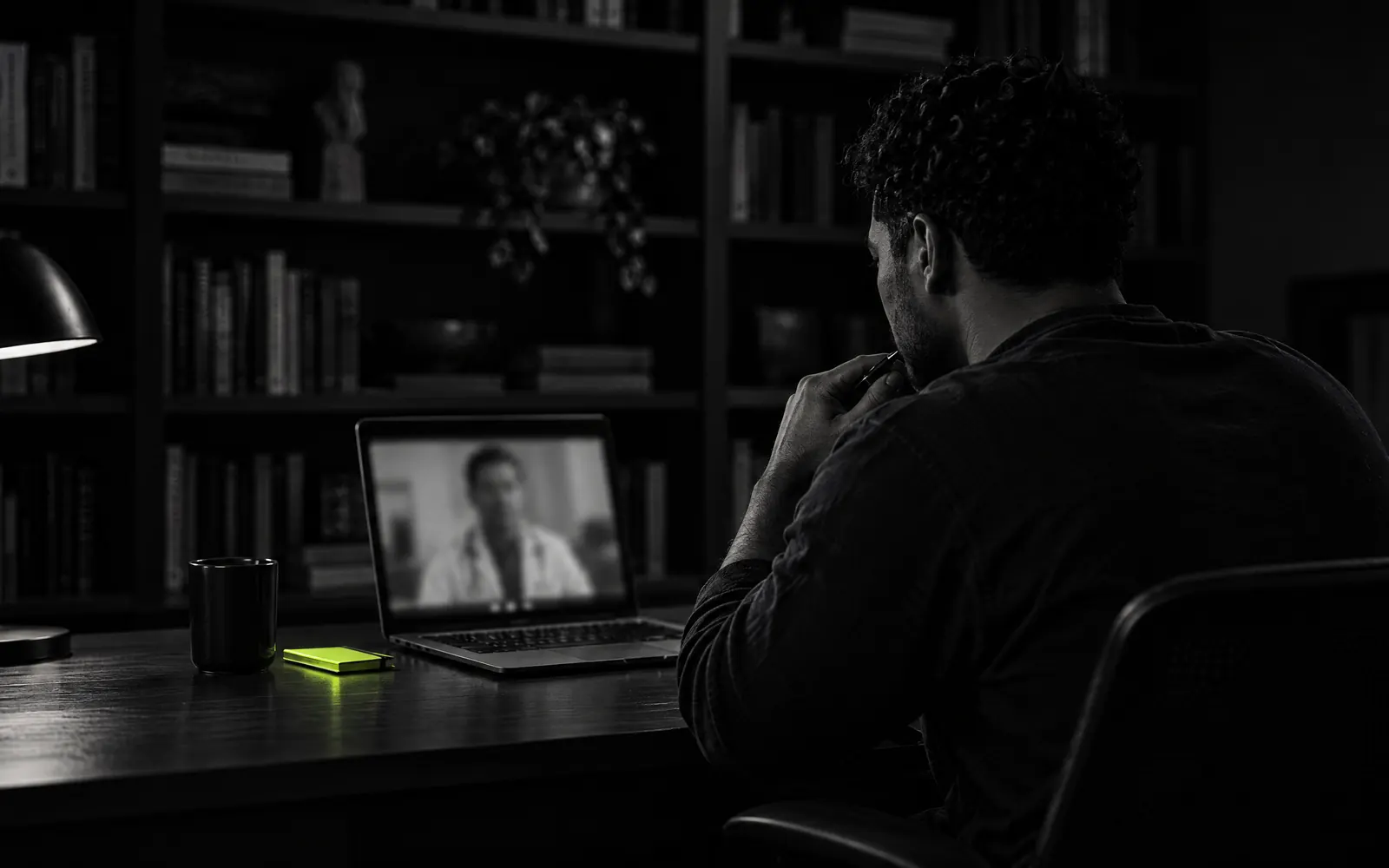
A Hustl Baseline includes these blood tests, a video consultation with an Australian-registered doctor and a written plan within 48 hours. You can see how it works on how it works and the cost on pricing.
From the journal

Hustl, 7 min read
Full blood test explained: what's in it and what it means
FBC, iron, thyroid, HbA1c and more, in plain words. What each part of a full blood test checks, and how to read your results.
Hustl, 4 min read
What a Baseline actually involves
Intake, bloods, a doctor consultation and a written plan. Here's each step.
What can a founder change this month?
You probably can't take three months off. You can usually change the shape of a week. Pick two or three of these, not all of them:
- Fix your wake time. A steady wake time, seven days a week, does more for sleep than most people expect.
- Set a caffeine cut-off. Try no coffee after midday for two weeks and see what happens to your nights.
- Give alcohol a job description. Decide in advance which nights you'll drink, rather than letting a hard day decide.
- Create an end to the day. A fixed stop time three nights a week, with the laptop closed and notifications off.
- Move every day. A walk outside in the morning gives you light, movement and thinking time at once. If you train hard, our recovery page covers why recovery matters as much as the session.
- Eat before you're starving. A proper lunch is one of the cheapest ways to soften the afternoon slump.
- Tell one person the truth. Not the investor update version. The real one.
Then measure again. If you got bloods done, repeat the ones that were off when your doctor suggests. If you're tracking sleep or resting heart rate, look at the trend over a month, not a single night.
If you run a business with staff as well as a startup, our guide for business owners covers the extra load of payroll and being the person who can't get sick. There's also a page for entrepreneurs and an overview of how Hustl helps with low energy.
A week that works
- Wake at the same time every day, weekends included
- No caffeine after midday for two weeks
- Alcohol-free on at least four weeknights
- Phone out of the bedroom, or at least out of reach
- A hard stop on work three nights a week
- A 20-minute walk outside before your first meeting
- One honest conversation a week with someone outside the company
- Bloods and a blood pressure check if you haven't had them in the last year
Common questions
Why do founders burn out?
Founders often have high demands, little support and no clear end to the working day, and their identity is tied to the company. There is usually no manager to notice when they're struggling. The World Health Organization links burnout to chronic workplace stress that hasn't been managed, and owning the company doesn't protect you from that. Many founders also act late, once stress is already high.
Is it normal to feel tired all the time as a founder?
It's common, but it isn't something you have to accept. Short or broken sleep, late caffeine, alcohol and stress explain a lot of founder tiredness. Physical causes such as low iron, thyroid problems, low vitamin D or B12, and blood sugar issues are also common and can be checked with blood tests. If tiredness lasts more than a couple of weeks, see a doctor.
How much sleep does a founder need?
Founders don't need less sleep than anyone else, even if the culture suggests otherwise. The Sleep Health Foundation's 2026 snapshot found Australians averaged 6.9 hours a night. Short sleep affects attention, judgement and mood, which are the things founders rely on most. A steady wake time and fewer late-night screens are good places to start.
What blood tests should a founder get?
A useful starting set for a tired founder includes a full blood count, iron studies with ferritin, thyroid function, HbA1c or glucose, vitamin D, B12, cholesterol, and kidney and liver function. Men may also check testosterone alongside symptoms. A doctor can help you decide which tests fit your situation and explain what the results mean for you.
Can caffeine make founder stress worse?
It can. Caffeine raises alertness, but too much or too late can make you feel jittery or anxious and can make sleep lighter and shorter. The Sleep Health Foundation says its effects can last 3 to 7 hours and it can take up to 24 hours to leave your body fully. Cutting off caffeine earlier in the day is a simple experiment worth trying.
How can founders deal with loneliness?
Founding a company can be isolating, because there are few people you can share everything with. Peer groups of other founders, a trusted co-founder or mentor, and regular time with friends outside work all help. A GP or counsellor is a good option too. If loneliness comes with low mood, call Beyond Blue on 1300 22 4636 or Lifeline on 13 11 14.
When should a founder see a doctor about tiredness or stress?
See a doctor if tiredness lasts more than two weeks without improving, if low mood spreads beyond work, if you're relying on alcohol to switch off, or if you have symptoms like breathlessness, chest pain or unexplained weight loss. If you have thoughts of harming yourself, call Lifeline on 13 11 14, or 000 in an emergency.
Sources
- Bupa and Oxford Economics survey of entrepreneurs, reported by Insurance Business, October 2025
- Sleep Health Foundation: Work stress fuelling Australians' poor sleep (Aussie Sleep Snapshot Survey 2026)
- Sleep Health Foundation: Caffeine and sleep
- NHMRC: Australian guidelines to reduce health risks from drinking alcohol
- Healthdirect: Fatigue
- Healthdirect: Jet lag
- Williamson AM, Feyer AM. Moderate sleep deprivation produces impairments in cognitive and motor performance equivalent to legally prescribed levels of alcohol intoxication. Occup Environ Med, 2000
- Safe Work Australia: Psychosocial hazards
- World Health Organization: Burn-out an occupational phenomenon (ICD-11)
- Beyond Blue: Work and mental health
General information only, not medical advice. Hustl is not an emergency service. If you need urgent help, call 000. For crisis support, call Lifeline on 13 11 14.