Guide for tradies
Tradie health: how to keep your energy up on the tools
Early starts, heavy lifting, heat and a servo lunch. Here's what a tradie's week does to your body, and what's worth checking.
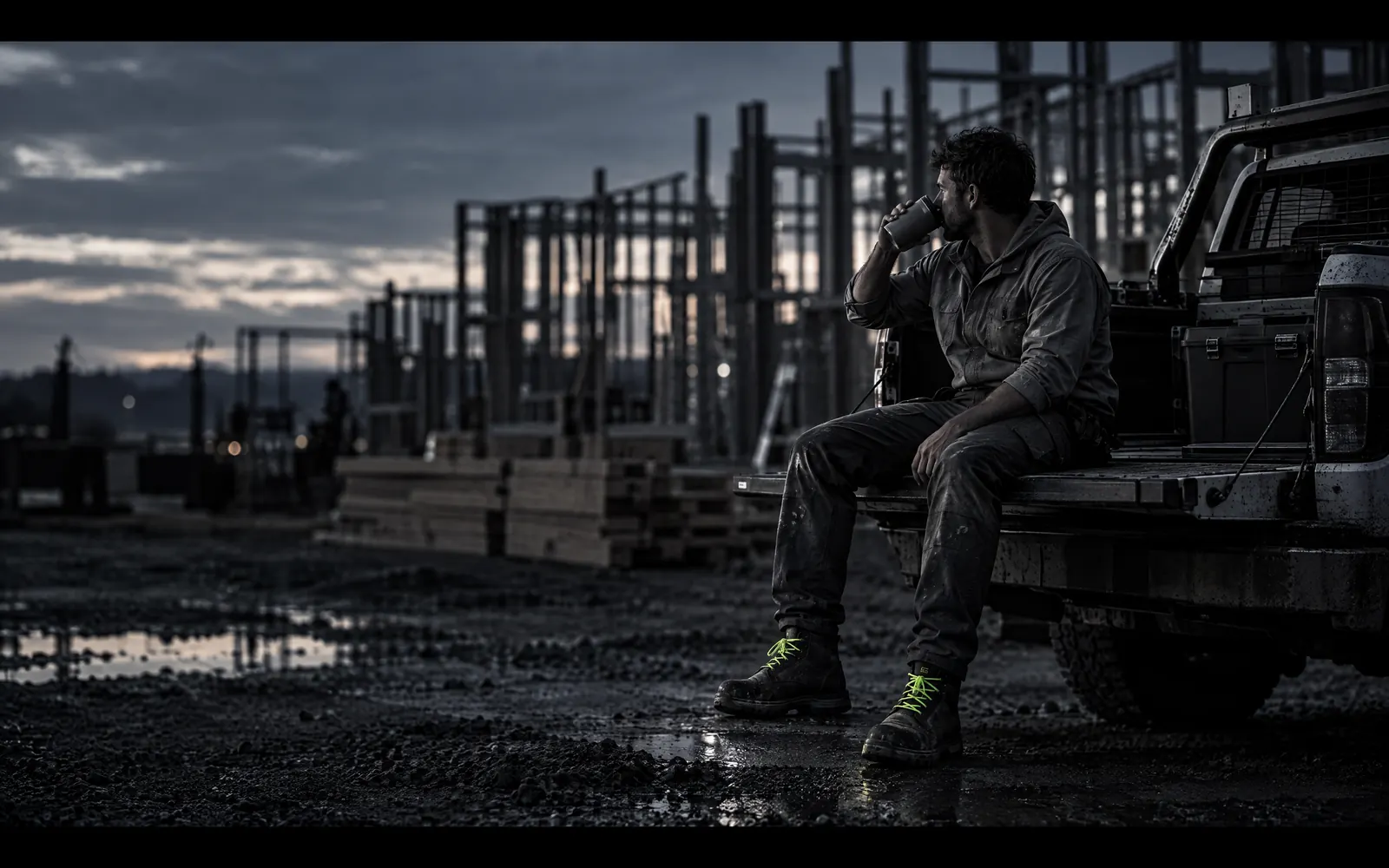
Tradies get tired for clear reasons: hard physical work, early starts and short nights, heat and sun, injuries that never get the rest they need, and food and drink grabbed on the run. On top of that sit the things you can't feel until they're checked, like blood pressure, blood sugar, iron or testosterone. Most tradie fatigue comes from a mix of these, and most of it can be improved once you know which ones are hitting you.
This guide is built around a real tradie's week. Up before five, on site by seven, flat out till knock off, then quotes and invoices at night if you run your own business. We'll go through what each part of that week does to your body, why fatigue matters for safety, which health checks tradies tend to skip, and when it's time to see a doctor.
It's written plainly, because you've got better things to do than read waffle.
Why are tradies so tired all the time?
Being tired after a hard day's work is normal. Being tired when you wake up, every day, isn't. The difference matters.
For most tradies, ongoing tiredness comes from a few things stacking up:
- Not enough sleep. A 5am alarm needs a 9pm bedtime to get a decent night, and that rarely happens.
- Physical load. Lifting, carrying, kneeling, climbing and working overhead all day uses a lot of energy and leaves your body needing time to recover.
- Heat. Working in hot conditions makes your body work harder just to keep cool.
- Fuel. Energy drinks, pies and long gaps without proper food give you spikes and crashes.
- Pain. A sore back or shoulder wrecks sleep and drains you even when you push through.
- Something medical. Low iron, thyroid problems, high blood sugar, sleep apnoea or low testosterone can all feel like "I'm just knackered".
One quick test: notice how you feel on a long weekend or the first days of a holiday. If you still wake up flat after a few good nights, rest probably isn't the whole answer, and it's worth getting checked.
Our post on why you might be tired all the time goes through the common causes, and the boring causes of fatigue covers the everyday ones that are easy to miss. The low energy page explains how a doctor works through it.
From the journal

Energy, 7 min read
Why am I so tired all the time? The common causes
Constant tiredness usually has a cause, or a few stacked together. Here's how to work out which ones are yours.
Energy, 5 min read
The boring causes of founder fatigue
Iron, B12, thyroid and blood sugar. Unglamorous, common and very fixable.
How do early starts affect a tradie's sleep?
Australia's guidelines recommend 7 to 9 hours of good quality sleep for adults, with consistent bed and wake up times. If you're up at 4:30 or 5, that means lights out somewhere between 8 and 9:30. For a lot of tradies, especially with kids or a business to run, that's not what happens. So they run on 5 or 6 hours through the week and try to catch up on the weekend.
The problem is that a sleep in on Saturday shifts your body clock, so Sunday night is harder and Monday's alarm hits even worse. A steady routine works better than big swings, even if it isn't perfect.
Things that help with early starts:
- Keep your wake up time roughly the same, even on weekends (within an hour or so)
- Get daylight early in the day, and keep evenings dimmer
- Have a set wind down time when the phone and the quotes go away
- Keep the bedroom cool, dark and quiet
- Don't use your days off to wipe out the week's sleep debt in one go
A short nap after work can take the edge off a big week, as long as you keep it brief and well before bedtime so it doesn't steal from the night.
One thing worth flagging: if you snore loudly, wake up choking or gasping, have a big neck or carry extra weight around the middle, or nod off whenever you sit still, ask a doctor about sleep apnoea. It's common in men, it's very treatable, and many people don't know they have it. Our post on how much sleep you need has more, and the sleep page explains how Hustl approaches it.
Why does tradie fatigue matter for safety on site?
On a building site, being tired isn't just unpleasant. It's a safety risk. Safe Work Australia describes fatigue as a state of physical, mental or emotional impairment that can stop people working safely. Employers must eliminate or minimise the risk of fatigue so far as is reasonably practicable, and workers also have a duty to take reasonable care for their own safety and for the people around them.
The stakes are real. In Safe Work Australia's latest key statistics, the construction industry recorded 41 worker fatalities in 2025, almost one in 5 worker deaths nationally. The fatality rate in construction was 3.0 per 100,000 workers, twice the overall rate of 1.5. Falls from height and being hit by falling objects, both common on construction sites, rose compared with the previous two years.
Fatigue affects reaction time, judgement and attention, which are exactly the things you need on a ladder, on a roof or near moving plant. It also matters on the drive. Many tradies drive long distances to and from site, often before dawn or after a long day.
If you run the crew, you set the tone. Proper breaks, rotating the heaviest tasks and not treating long hours as a badge of honour make a site safer for everyone, including you.
Signs you're too tired to work or drive safely:
- Yawning constantly, heavy eyelids or drifting off when you stop
- Making small mistakes you wouldn't normally make
- Struggling to remember the last few kilometres of a drive
- Feeling irritable and short with the crew
If you work rosters or long swings, our post on shift work and FIFO fatigue covers sleeping around changing shifts, and our page for mining and FIFO workers is built around rosters.
How do heat and sun affect a tradie's health?
Australian summers are hard work. Safe Work Australia explains that your body needs to keep a normal temperature to stay healthy, and heat related illness happens when it has to work too hard to keep cool, or starts to overheat. Employers have a duty to manage the risks of working in heat.
Dehydration often creeps up before heat illness does. Common early signs are thirst, a dry mouth, feeling dizzy or light headed (especially when standing up), headaches, dark coloured urine and weeing less often than usual. If you're getting headaches every hot afternoon, or your urine is dark by smoko, you're probably not drinking enough.
The first hot days of the season, or coming back after a break, are often the hardest, because your body hasn't adjusted to the heat yet. Go a bit easier for the first few days and keep an eye on newer workers and apprentices.
Then there's the sun. Cancer Council Australia says tradies can get up to ten times the UV exposure of indoor workers. In its 2022 survey of 600 Australian tradespeople, 89% spent time outdoors on a typical workday, and 42% of those spent more than four hours outside. Even so, 25% said they rarely or only occasionally wore sunscreen in summer, and 46% in winter. A third (34%) had already been treated for skin cancer or a suspicious spot.
The Better Health Channel says outdoor workers are one of the highest risk groups for skin cancer and need sun protection all year round. More than 2 in 3 Australians will be diagnosed with skin cancer in their lifetime.
- Slip on sun protective clothing, slop on sunscreen and reapply, slap on a broad brim hat, seek shade, slide on sunglasses
- Do the heaviest outdoor work early in the day where you can
- Drink water regularly through the day, not just at smoko
- Get a skin check, and check your own skin for new or changing spots
Working outdoors doesn't always mean your vitamin D is fine, especially in winter or if you cover up well. Our post on vitamin D and energy in Australia explains what the evidence says.
From the journal
Energy, 4 min read
Vitamin D and energy in Australia: what the evidence says
Sunny country, plenty of people running low. What vitamin D has to do with tiredness, and where the evidence gets thin.
Energy, 7 min read
Why am I so tired all the time? The common causes
Constant tiredness usually has a cause, or a few stacked together. Here's how to work out which ones are yours.
Why do tradie injuries linger?
Most tradies have a sore back, knee or shoulder they just work around. The trouble is that working around it often means it never fully heals.
Body stressing, meaning injuries from lifting, carrying, bending, repetitive movements and awkward positions, is the biggest cause of serious workers' compensation claims in Australia. In Safe Work Australia's latest figures, it accounted for 51,800 serious claims (35.2%) in 2024-25, with a median of 9.5 weeks off work. Construction alone recorded 17,200 serious claims that year.
In South Australia, SafeWork SA reports that musculoskeletal disorders are the leading cause of injury in construction, making up 31% of claims, and about 70% of those involve muscular stress from lifting, carrying or putting down objects. Construction body stressing claims in that state more than doubled between 2021-22 and 2024-25.
Injuries also affect more than the injured part. Safe Work Australia's analysis found that after a work injury with a month or more off, people's general health dropped by about 8% and mental health by about 7% on average, and both were still below where they started five years later. Pain wrecks sleep, poor sleep makes pain feel worse, and less movement means less fitness. It's a loop.
Tiredness makes injuries more likely too. Lifting with tired muscles, or rushing at the end of the day to get the job finished, is often when backs and shoulders go.
What helps:
- Get a niggle looked at early, by your GP or a physio, before it becomes a claim
- Use the mechanical aids and trolleys on site, even when it feels quicker to just lift
- Build strength away from work, especially your back, hips and shoulders
- Protect your sleep, because that's when your body repairs
- Cut back on alcohol while you're healing
The recovery page explains how a doctor looks at slow recovery, and our post on heart rate variability covers one way to track how well you're bouncing back.
Are energy drinks and smoko food making the slump worse?
Energy drinks are a staple on a lot of sites. They work, briefly. Healthdirect lists a 250 mL energy drink at about 80 mg of caffeine, roughly the same as a teaspoon of instant coffee, and an espresso at about 145 mg. Many cans in the servo fridge are bigger than 250 mL, and plenty of tradies have two or three a day on top of coffee.
Caffeine's effects can last for up to 6 hours, depending on the person. So a can at 2pm to push through the afternoon can still be in your system at 8pm when you're trying to get to sleep for a 5am start. Less sleep means you need more caffeine the next day. Our post on caffeine timing explains the loop, and caffeine and anxiety covers the jittery, wired feeling some people get.
Many energy drinks are also high in sugar. Combined with a pie, a sausage roll or a big white bread lunch, that can give you a lift and then a crash an hour or two later. Our post on the afternoon slump and blood sugar goes through why.
If you need an energy drink to get through every afternoon, that usually means something upstream, most often sleep, needs attention. More caffeine just moves the problem to tomorrow.
A few simple swaps that make a real difference:
- Eat a proper breakfast before you leave, even something quick
- Pack a lunch with protein and some veg, so you're not relying on the bakery
- Keep water in the ute, and drink it through the day
- Have your last caffeine by early afternoon
- If you have energy drinks, swap one a day for water and see how you feel after a fortnight
Which men's health checks do tradies skip?
Many tradies only see a doctor when something's broken or bleeding. Taking a morning off site for a check up means lost income, so it keeps getting pushed back. But some of the most important health problems give you no warning until they're well along.
Checks worth having, especially from your 30s and 40s onwards:
- Blood pressure: high blood pressure usually has no symptoms. See high blood pressure and tiredness.
- Cholesterol: part of your heart risk. See cholesterol results explained.
- HbA1c: your average blood sugar, which can creep up without you noticing. See HbA1c and energy.
- Iron, thyroid and a full blood count: common causes of tiredness that a blood test can check
- Testosterone, if you have symptoms: low drive, low energy, low mood and losing strength can have many causes, and this is one worth checking. See low testosterone symptoms.
- Skin checks: given the hours you spend in the sun
If cost or time is the barrier, start with your GP. Many basic checks, like blood pressure, are quick, and Medicare covers a lot of GP care. The point is to have numbers rather than guesses.
Women in trades should add iron to the top of that list, especially with heavy periods.
The good news is you don't always need to lose a morning. A Hustl Baseline includes the blood tests (done at a pathology collection centre, many of which open early), a video consultation with an Australian-registered doctor and a written plan within 48 hours. You can see how it works or check pricing, and the hormone check page has more on testosterone. Our page for trades covers the rest.
From the journal
Energy, 7 min read
Male with low testosterone symptoms? What to check first
Low energy, low libido and low mood can point to low testosterone. They also have common causes that are worth checking first.
Hustl, 4 min read
What a Baseline actually involves
Intake, bloods, a doctor consultation and a written plan. Here's each step.
How common are mental health struggles in construction?
More common than most people on site would guess. MATES in Construction, the industry's own suicide prevention charity, says construction workers are nine times more likely to die from suicide than from an accident at work. That's a hard number to read, and it's why so many sites now have MATES connectors and training.
Work stress shows up in the compensation numbers too. Safe Work Australia's latest figures show mental stress caused 17,000 serious claims in 2024-25, with a median of 35 weeks off work, far longer than physical injuries.
For tradies, pressure often comes from a few directions at once: cash flow and chasing invoices if you run your own business, job insecurity between contracts, long hours, injuries, time away from family and a culture where you're expected to just get on with it. Alcohol often becomes the way to switch off. Australia's NHMRC guidelines say healthy adults should drink no more than 10 standard drinks a week and no more than 4 on any one day. A big weekend can blow through that by Saturday arvo, and the comedown, which we cover in hangxiety, can make Monday feel even worse.
Signs it's more than a bad week:
- Feeling flat, angry or numb most days for two weeks or more
- Not enjoying things you used to, like footy, fishing or time with mates
- Drinking more to cope, or needing a drink to sleep
- Pulling away from family and friends
- Thinking things would be easier if you weren't around
You don't need the right words. Saying "I'm not doing great" to a mate, your partner or your GP is enough to start. And if a mate has gone quiet, a simple "how are you really going?" over a coffee can open the door.
If any of that sounds like you or a mate, talk to someone. MATES in Construction has a 24/7 support line on 1300 642 111. You can also call Beyond Blue on 1300 22 4636 or Lifeline on 13 11 14. If you or someone else is in danger, call 000.
If you run your own business, our post on whether you're burnt out and our page for business owners may help. The stress page explains how a doctor can help.

When should a tradie see a doctor?
Don't wait until you can't work. See a doctor if:
- You've been tired most days for more than a few weeks, and a few early nights or a week off doesn't help
- You snore loudly, wake up gasping, or nod off while driving or sitting still
- You get chest pain, a racing or irregular heartbeat, or get short of breath doing work you used to handle easily
- A sore back, shoulder or knee isn't getting better after a couple of weeks, or you have numbness, tingling or weakness
- You notice a new spot, or one that's changing in size, shape or colour
- You've lost weight without trying, you're always thirsty, or you're weeing more than usual
- Your mood has been low for two weeks or more
If something feels badly wrong, like chest pain, sudden weakness on one side, or confusion on a hot day, call 000.
A GP is the right place for most of this. If you want a fuller picture of your energy, with blood tests and a doctor who looks at how your week actually runs, that's what a Hustl Baseline is for. Our post on a full blood test explains what's usually checked.
From the journal
Hustl, 7 min read
Full blood test explained: what's in it and what it means
FBC, iron, thyroid, HbA1c and more, in plain words. What each part of a full blood test checks, and how to read your results.
Hustl, 4 min read
What a Baseline actually involves
Intake, bloods, a doctor consultation and a written plan. Here's each step.
A week that works
- Set a lights out time that gives you 7 or more hours before the alarm
- Keep your wake up time within an hour on weekends
- Eat breakfast before you leave and pack a proper lunch
- Keep water in the ute and drink it through the day, not just at smoko
- Last caffeine or energy drink by early afternoon
- Sunscreen on before you start and again at smoko, plus a broad brim hat
- Use the trolley or lifting aid instead of carrying it yourself
- Get niggles looked at early, before they become a claim
- Book a check of your blood pressure, cholesterol, blood sugar and skin
- Check in on a mate, and save 1300 642 111 in your phone
Common questions
Why do tradies get so tired?
Most tradie fatigue comes from a mix of things: short sleep with early starts, heavy physical work, heat, long gaps without proper food, energy drinks and coffee, and pain from old injuries. Sometimes there's a medical cause too, like low iron, thyroid problems, high blood sugar, sleep apnoea or low testosterone. If you're tired when you wake up most days, it's worth getting checked.
Is fatigue a workplace safety issue for tradies?
Yes. Safe Work Australia describes fatigue as a state of physical, mental or emotional impairment that can stop people working safely. Employers must eliminate or minimise the risk of fatigue so far as is reasonably practicable, and workers have a duty to take reasonable care for their own safety and the safety of others. Fatigue also matters on the drive to and from site.
Are energy drinks bad for tradies?
One now and then isn't a big deal, but several a day can affect your sleep and leave you more tired overall. Healthdirect lists a 250 mL energy drink at about 80 mg of caffeine, and caffeine's effects can last up to 6 hours. Many energy drinks are also high in sugar, which can lead to an afternoon crash. Swapping one a day for water is a good start.
How much sun protection do outdoor workers need?
The Better Health Channel says outdoor workers are one of the highest risk groups for skin cancer and need protection all year round, not just in summer. Use a combination of measures: sun protective clothing, sunscreen that you reapply, a broad brim hat, shade and sunglasses. Schedule the heaviest outdoor work early in the day where you can, and get your skin checked regularly.
What health checks should a tradie get?
Blood pressure, cholesterol and blood sugar (HbA1c) are a good start, especially from your 30s and 40s onwards, because problems often have no symptoms early. A full blood count, iron and thyroid tests can help explain tiredness. Men with low drive, low energy or low mood can ask about testosterone. Regular skin checks matter too, given time in the sun.
Where can tradies get mental health support?
MATES in Construction runs a 24/7 support line on 1300 642 111 and has trained connectors on many sites. You can also call Beyond Blue on 1300 22 4636 or Lifeline on 13 11 14 at any time. Your GP can help too, including with a mental health plan. If you or someone else is in danger, call 000.
Can I get blood tests without taking a day off site?
Often, yes. Many pathology collection centres open early, so you can get bloods done before work. A Hustl Baseline includes the blood tests, a video consultation with an Australian-registered doctor and a written plan within 48 hours, so you don't need to sit in a waiting room. Your GP can also order tests if you prefer to go that way.
Sources
- MATES in Construction
- Safe Work Australia: Key Work Health and Safety Statistics Australia (latest release)
- Safe Work Australia: Fatigue
- Safe Work Australia: Working in heat
- SafeWork SA: Construction industry feeling the strain of manual tasks (2026)
- Cancer Council Australia: Tradies aren't protecting against skin cancer despite up to ten times higher UV exposure (2022)
- Better Health Channel (Victoria): Skin cancer, protecting outdoor workers
- Healthdirect: Caffeine
- Department of Health, Disability and Ageing: Physical activity and sedentary behaviour guidelines for adults 18 to 64
- NHMRC: Australian guidelines to reduce health risks from drinking alcohol
General information only, not medical advice. Hustl is not an emergency service. If you need urgent help, call 000. For crisis support, call Lifeline on 13 11 14.